The X Action in the Princeton Offense
6 min read
What Is the X Action?
The X Action is one of the most versatile plays in the Princeton Offense. It gets its name from the crossing pattern the guards make after the initial entry pass — their paths form an "X" on the court.
Some coaching systems call this the Chest Action. Same concept, different terminology. If you hear another coach mention "Chest" in the context of Princeton sets, they're talking about this play.
What makes X special is its DNA. It's a variation of the Point Series run from a different angle with built-in counters. Same reads. Different entry point. That means your players are learning one set of decisions and applying them from multiple spots on the floor.
I've found X to be one of the easiest actions to install because if your team already knows the Point Series and the Wave Away action, they already know 80% of the reads. The entry is different. The execution is the same.
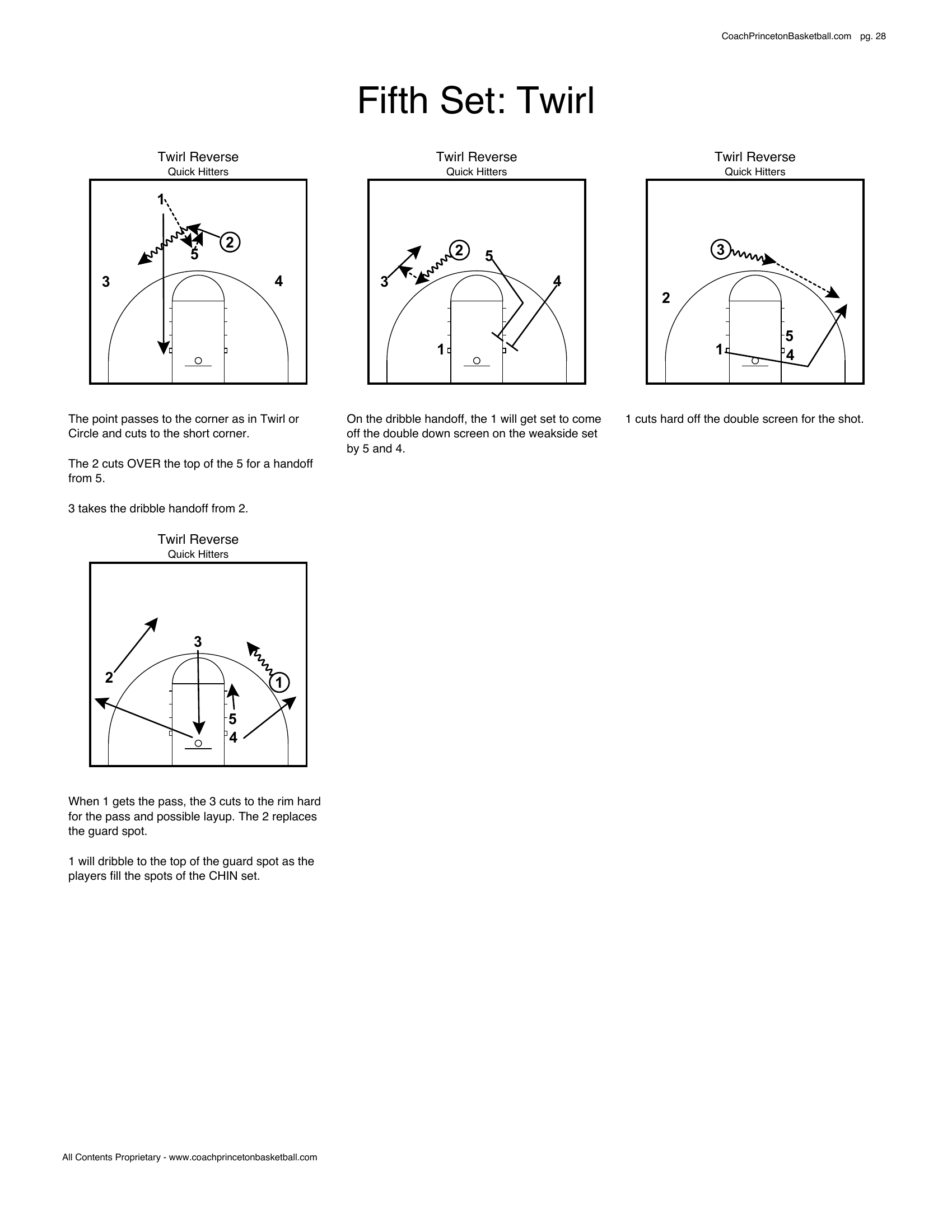
Setup and Alignment
The X Action starts from a standard Princeton alignment with the ball at the top:
- 1 (point guard) has the ball at the top of the key
- 3 (wing) is positioned on the wing, ready to receive the entry pass
- 5 (high post) is at the elbow or high post area
- 2 (guard) and 4 (forward) fill the weak side
The Entry
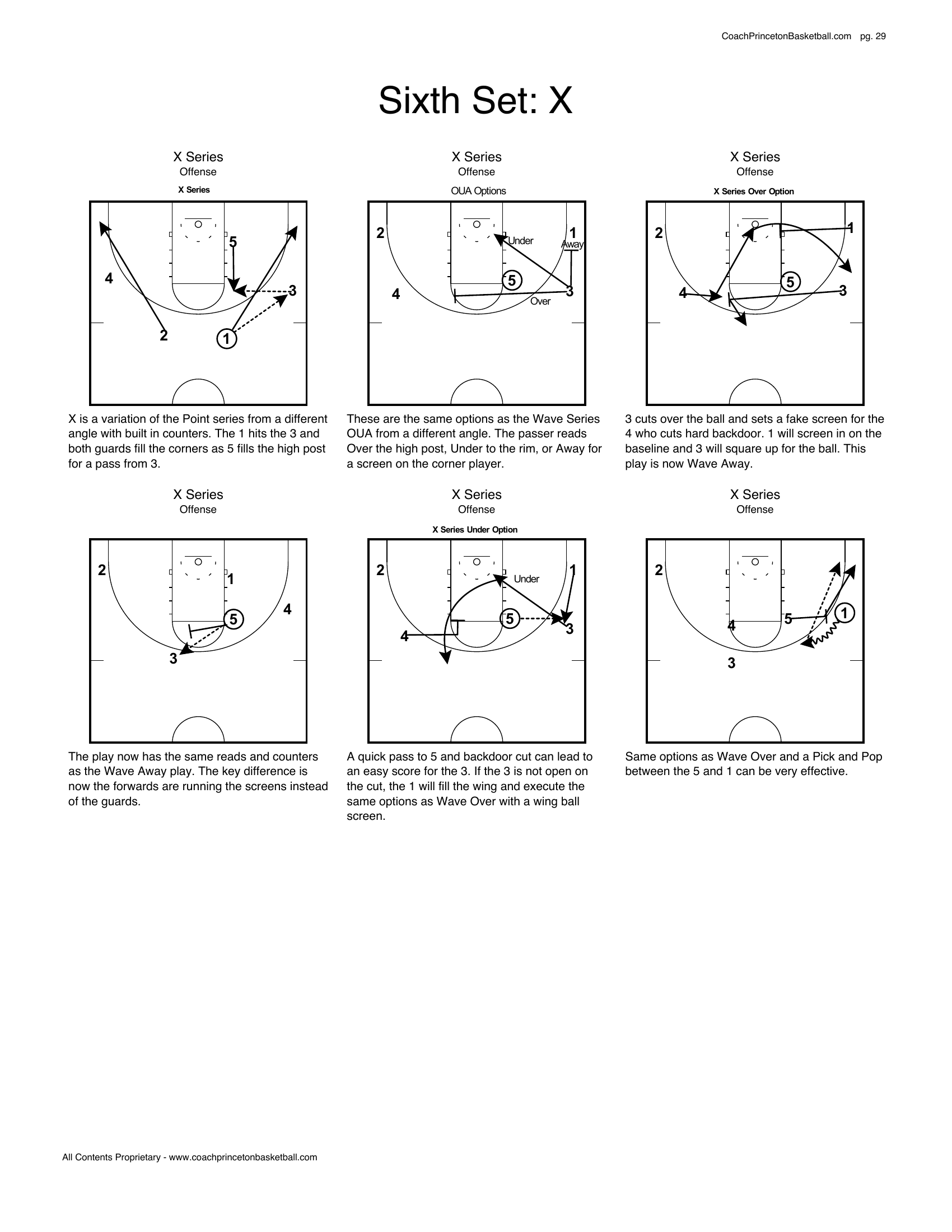
The action begins when the 1 passes to the 3 on the wing. After the entry pass, both guards — the 1 and the 2 — cut to fill the corners. This is the crossing action that gives the play its name. The paths of the two guards form that "X" across the floor.
Once the corners are filled, the 5 flashes to the high post to receive a pass from the 3. The moment 5 catches at the high post, the offense is loaded and ready. The 3 becomes the decision maker on the wing, and the 5 at the elbow becomes the hub of the action.
Primary Reads and Options
Here's what makes X so dangerous: the passer (3 to 5) reads three options, and every one of them is a scoring opportunity. These are the same OUA reads — Over, Under, Away — that your team runs in the Wave Series, just from a different angle on the floor.
1. Over — High Post Attack
The "Over" read is the most direct option. After the 5 catches at the high post, the 3 cuts over the top of the ball and sets a fake screen for the 4. The 5 faces up and reads the defense:
- If the lane is open → 5 attacks the basket
- If help comes from the corner → 5 kicks to the open shooter
- If the defense sags → 5 takes the mid-range jumper
A quick pass to the 5 and a backdoor cut can lead to an easy score for the 3. If the 3 is not open on the cut, the 1 fills the wing and executes the same options as Wave Over with a wing ball screen. A pick and pop between the 5 and 1 can be extremely effective here.
2. Under — Backdoor Cut
The "Under" read attacks the heart of the defense. After the 3 cuts over and sets the fake screen, the 4 reads the screen and cuts hard backdoor to the rim.
This is a layup read. If the 4's defender is watching the ball or gets screened, the backdoor cut is wide open. The 5 delivers the pass to the basket for an uncontested finish.
The key coaching point here: the 4 must set up the cut. Walk the defender into the screen before cutting. If the 4 just sprints backdoor without selling the screen, the defense reads it every time.
3. Away — Corner Screen Action
The "Away" read creates offense on the weak side. If neither the Over nor Under reads are available, the 5 looks Away — to the corner player on the opposite side.
The 1 sets a baseline screen for the corner player, and the 3 squares up for the ball on the wing. This play now becomes Wave Away with all its reads and counters intact.
The beauty of this read: the forwards are now running the screens instead of the guards. That's the key difference from standard Wave Away, and it creates mismatches that defenses aren't prepared for.
Want All the X Series Diagrams?
The complete playbook includes full-court diagrams for every X Action option, plus 42 breakdown drills to install the entire Princeton system in two weeks.
Get the Full Playbook — $39Coaching Points and Common Mistakes
What to Teach
- Sharp corner cuts. When the guards cross to fill the corners after the entry pass, those cuts must be purposeful. Jog to the corner and you give the defense time to recover. Sprint to the corner and you create the spacing the offense needs.
- 5 must catch and face. The high post player needs to catch the ball, pivot to face the basket, and read the floor — all in one motion. Catching with your back to the basket kills the timing of every read.
- Sell the fake screen. On the Over and Under reads, the 3 must set a convincing fake screen. This is what freezes the defense and creates the window for the 4's backdoor cut.
- Read the defense, don't guess. The OUA reads are reactive, not predetermined. The passer decides Over, Under, or Away based on what the defense gives. If you call the read before the play starts, you're running a play, not an offense.
Common Mistakes
- Guards standing in the corners. After filling the corners, the guards need to stay engaged. They're not spectators — they're spacing the floor and reading for the Away action.
- Telegraphing the entry. If the 1 stares down the 3 before the entry pass, the defense jumps the passing lane. Use ball fakes and shot fakes to keep the defense honest.
- Rushing the high post entry. The pass to the 5 at the high post needs to be on time — not early. If the 5 hasn't established position, the pass gets deflected or the defense recovers before the reads develop.
- Forgetting the Wave Away option. Many teams get fixated on the Over and Under reads and never look Away. That third option is where the offense resets and finds open shots when the first two reads are taken away.
When to Use X vs. Other Actions
Every Princeton action has a situation where it shines. Here's when X is your best call:
- Use X when defenses are overplaying the Chin entry. X gives you the same reads from a completely different angle, and defenses that have scouted your Chin action won't recognize it fast enough.
- Use X when your forwards are better screeners than your guards. The Away option puts your 3 and 4 in screening roles instead of your 1 and 2 — play to your personnel.
- Use X when you need a change of pace. If you've been running Point Series and the defense has adjusted, X gives them the same reads from a different look. Same answers, different test.
- Use Low instead when you have a dominant post player who needs the ball on the block. X is a perimeter-initiated action.
Practice Drill: 3-on-3 X Reads
Here's how I install the X Action in practice. Start with a 3-on-3 shell using the 3, 4, and 5 positions. No guards in the corners yet.
- Walk-through (5 minutes): 3 enters to 5 at the high post. Walk through Over, Under, and Away reads without defense. Every player calls out the read before executing.
- Add dummy defense (5 minutes): Defenders stand in position but don't contest. Offense reads the positioning and makes the correct decision.
- Live 3-on-3 (10 minutes): Full speed with the defense trying to take away reads. Offense must execute the correct counter.
- Add guards in corners (5 minutes): Go 5-on-5 and run the full X Action with the crossing entry. Now the Away option is live with the baseline screen.
For more structured Princeton Offense drills, the full playbook includes 42 breakdown drills that progress from 2-on-0 to full 5-on-5 game situations.
Frequently Asked Questions
What is the difference between X Action and Chest Action?
They are the same play. "X Action" refers to the crossing pattern of the guards, while "Chest Action" is an alternate name used in some coaching systems. The reads, alignment, and execution are identical regardless of which name you use.
Can I run X Action without a skilled high post player?
The 5 needs to be able to catch, face up, and make a simple read. They don't need to be a scorer — they need to be a decision maker. If your 5 can catch and pass to the right spot, the X Action will work. The scoring comes from the cuts and the screening action, not from the high post player isolating.
How does X Action fit with the rest of the Princeton Offense?
X is a variation of the Point Series run from a different entry angle. It shares the same OUA (Over, Under, Away) reads as the Wave Series. If your team already knows Point and Wave, installing X takes one practice. It gives you another way to attack without adding new reads to your playbook.
Get the Complete Princeton Offense System
Six sets. Fourteen counters. 42 breakdown drills. The complete system with all diagrams, reads, and counters. From Coach Lee DeForest, with 25 years of coaching experience.
Get the System — $39